


September 6, 2026
Presentation of an invited talk entitled "Biological mechanisms of sexual partner preference" during a symposium on "The Biological Basis of Sexual Orientation: The In Utero Role of Genetics, Epigenetics, Immunology, and Endocrine Disruptors (Organizer David DeMarini) as part of the Internatinal Conference on Endvironmental Mutagens (ICEM) in Edinburgh.
Abstract
Animal studies demonstrate that many differences between males and females result from the permanent organizing action of testicular hormones during embryonic development. These same hormones are still present and active in humans and determine morphological, physiological and behavioral differences between men and women. We will review clinical and epidemiological studies strongly suggesting that these hormonal mechanisms play a significant role in determining sexual orientation. Indeed changes affecting the embryonic hormonal environment are associated with an increased incidence of homosexuality. Furthermore, sexually differentiated traits, controlled, at least in part, by embryonic testosterone, are feminized in homosexual men and/or masculinized in homosexual women. Family trees also indicate that in Western societies, 30 to 50% of the variance in sexual orientation is explained by genetic factors. Additionally, the maternal embryonic environment modifies the incidence of male homosexuality presumably via immunological mechanisms. This biological research thus indicates that embryonic hormones, in combination with genetic and epigenetic factors play a major role in determining sexual orientation in all mammals including humans. People do not choose their sexual orientation which is essentially determined prenatally. What people choose is how to act on the sexual orientation they were born with.

August 2025
Publication in Kindle Direct Publishing of my autobiography entitled "Between passion and serendipity: The journey of a happy Biologist"
The book can be purchased as a paper copy or as pdf from Amazon.com for 14.99 or 4.99 US$ respectively

Foreword
I wrote this book to remember, while I still can, all the happy moments that my scientific career from 1971 to 2025 brought me, and to pass this information on to anyone who might be interested (colleagues and ex-colleagues, family, etc.). I also did it for my own personal pleasure, because I love to write - it's been a big part of my activity for the last 20 years - and it was a joy for me to put down on paper all these memories, most of them pleasant, even if some episodes were less enjoyable.
I also imagined that reading these memoirs might be of interest to all those who have taken part in this adventure, Masters, PhD students and post-docs who studied under my supervision, visitors to the laboratory, collaborators, as well as some of my close friends and family, in particular my two sons, who lived near me over the years, sometimes wondering what I spent my weeks doing and why I devoted so much time and energy to this activity.
I also thought it would be interesting to potentially compare my vision of this journey with theirs: our memories are always partial and imprecise. They are strongly affected by our current interests and motivations. We only remember what interests us, so no two people remember a given event in the same way. Episodes in my career that I experienced as pleasant may therefore have been perceived differently by my students and collaborators. Consulting this biography could help to reconcile these points of view.
Beyond this very self-focused interest, I think this book has a more didactic value. This account of my career illustrates a number of general themes, including:
-the incredible technical and technological evolution that took place in the second half of the 20th century and continues to this day,
-the resulting transformation of scientific research, which means that the life of a researcher today is very different from what it was when I began my work. I have already commented on these themes in an earlier book[1] , but they are covered here in a more illustrated way,
-the fact that the world has undergone a profound transformation in the second half of the 20th century and into the 21st century, and in particular that we have gone from a society where everything seemed possible, and where growth and progress seemed to have no limits, to a society that is very aware of the planet's limits, even if it is still reluctant to adapt accordingly,
-and last but not least, the idea that chance and serendipity play a major role in the progress of basic research, and therefore of Science with a capital letter. Fundamental research cannot be planned, otherwise it becomes sterile. Yet over the last few decades, we have seen a shift in research funding towards increasingly applied projects, with a steady reduction in the proportion of funding reserved for basic research. In my view, this is counter-productive. The short-term benefit to society may temporarily increase, but this is at the expense of the more fundamental progress we can hope for in the longer term.
This being said, there should be no misunderstanding about the role I attribute to serendipity in the progress of my career and of science in general. I am by no means a fatalist, and I believe that hard work is essential to any scientific breakthrough. The results I have accumulated and published have required many hours of dedicated work. But having said that, the questions that were addressed were the result of unplanned meetings or readings. These questions would probably/possibly have been addressed by others or by me at another time, but my path would have been different.
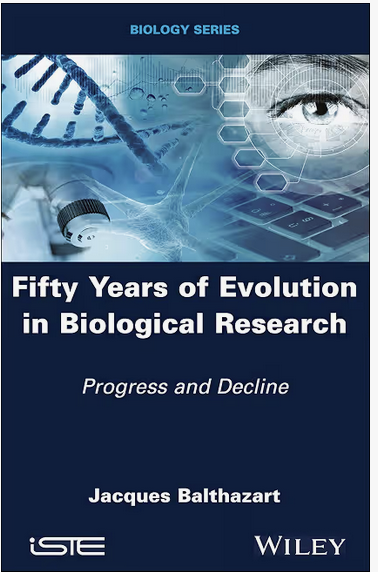
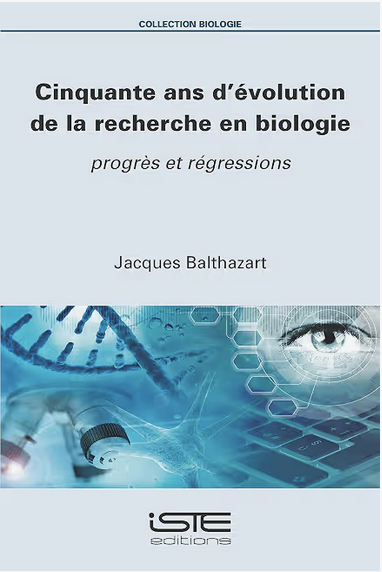
[1] Balthazart J. (2023). Fifty years of evolution in biological research. Progress and regression. ISTE Editions, pp. 153.
Summer 2023
Publication by ISTE/ Wiley in French and then in English of my book on 50 Years of Evolution in Biological Research
Preface
I am a biology researcher who has been officially retired for eight years, but I continue my scientific activity from a place of passion. As I often told my friends and colleagues, I have been paid my entire working life for an activity that was also a hobby, and I see no reason to stop this activity just because my salary has been turned into a pension. This being said, this “job”, if it is a job at all, has changed profoundly over the course of my 50- year career, sometimes for the better, but often for the worse. This is what I would like to explain in this book while evoking what the life of a researcher in the fundamental sciences interested in knowledge can be, independently of the profit that can be made from it.
I initially experienced the profound changes in research conditions during my career with enthusiasm. This was probably related to my naivety and inexperience, but retrospectively, I really think that most of the changes that occurred in the research world during the last quarter of the 20th century have had largely positive effects. First of all, there have been significant changes in analytical techniques, particularly at the biochemical and then at the genetic level, which have made it possible to tackle questions that were previously impossible to study. In addition, research tools have become considerably more sophisticated. First, calculation tools and also all the equipment used in the laboratory have become miniaturized and automated. These changes have rapidly made it possible to carry out a much larger amount of work in one day.
However, at the same time, new constraints and obligations have gradually developed, while the expectations of what the researcher should produce have grown exponentially. This initially led to a limitation of the researcher’s possibilities to make progress, but then we saw a gradual decrease in the quality of research, for some in any case, as a result of the increasing pressure to publish that gradually developed.
It is my gradual discovery of this state of affairs that has prompted me to pick up my pen and try, first of all, to take stock of the current situation, to identify as precisely as possible the causes of the problem and to propose the solutions that seem possible at this stage. I hope that this short book will serve as a catalyst for the scientific community and the organizations that fund it to correct this state of affairs as much as possible. That said, research has by now become a commercial enterprise not quite like any other, but is nevertheless subject to significant constraints. Even so, I hope that this creative activity at the highest level which is eminently satisfying can survive in a disinterested form by promoting above all curiosity and the thirst for learning.
New publications since 2024
(2024)
ALWARD, B.A., BALTHAZART, J., BALL, G.F. (2024). Androgen signaling in LMAN regulates song stereotypy in male canaries. Horm. Behav. 65:105611. doi: 10.1016/j.yhbeh.2024.105611.
BALTHAZART J. (2024). Photoperiodism, testosterone and adult neurogenesis in canaries (Serinus canaria). J. Neuroendocrinol. 17:e13449. doi: 10.1111/jne.13449.
HAAKENSON, C.M., BALTHAZART, J.H., VANRYZIN, J.W., MARQUARDT, A.E., ASHTON, S.E., MCCARTHY, M.M., BALL, G.F. Neurochemical characterization of dopaminoceptive cells in song control nuclei of canaries and their activation during song production: a multiple fluorescent in situ hybridization study. J. Comp. Neurol. 532(10):e25675. doi: 10.1002/cne.25675.
COURT L., TALBOTIER L., LEMARCHAND J. CORNILLEAU F., PECNARD E., BLACHE M.C., BALTHAZART J., CORNIL C.A., KELLER M., CALANDREAU M., PELISSIER L. (2024). Exploring neuronal markers and early social environment influence in divergent quail lines selected for social motivation. 14(1):23554. doi: 10.1038/s41598-024-74906-3.
BALTHAZART J. (2024). Announcement: Gregory F. Ball wins the 2024 Donald S. Farner Medal for Excellence in Research in the Field of Avian Endocrinology. J. Neuroendocrinol. XXX doi: 10.1111/jne13436.
(2025)
BALTHAZART J., BALL G.F. Male Sexual Behavior and Hormones in Non-Mammalian Vertebrates. Encylopedia Anim. Behav. Elsevier
(2026)
SAKATA, J.T & BALTHAZART, J. (2026). Cellular mechanisms regulating the timing of organizational effects of sex steroid hormones. Hormones and Behavior 181, 105923.
IN PREPARATION
BALL, G.F. & BALTHAZART, J. Hormones and audition in songbirds. Dans “Comparative bird hearing and bioacoustics”, Springer Handbook of Auditory Research series (SHAR),
BALL, G.F. & BALTHAZART, J. Neuroendocrine Regulation of Reproductive Behavior in Birds. In « Hormones, Brain and Behavior » 4th Edition ; Raoul Paredes, Ed.
BALTHAZART, J., ARNOLD, A.P. , CORNIL C.A. & ADKINS-REGAN, E. Sexual Differentiation of Brain and Behavior in Birds. In « Hormones, Brain and Behavior » 4th Edition ; Raoul Paredes, Ed.
BALL, G.F. & Balthazart, J. Sex steroid hormones and sensorimotor vocal development in songbirds